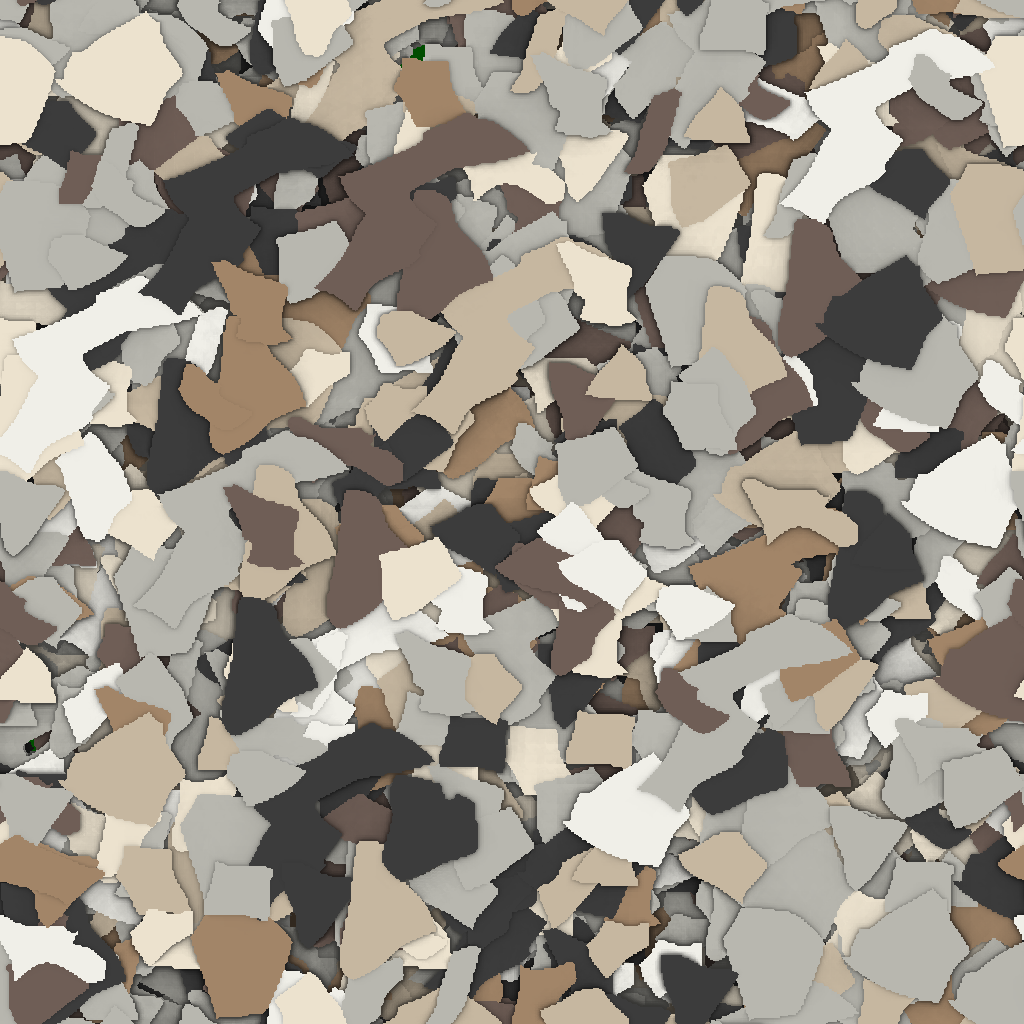
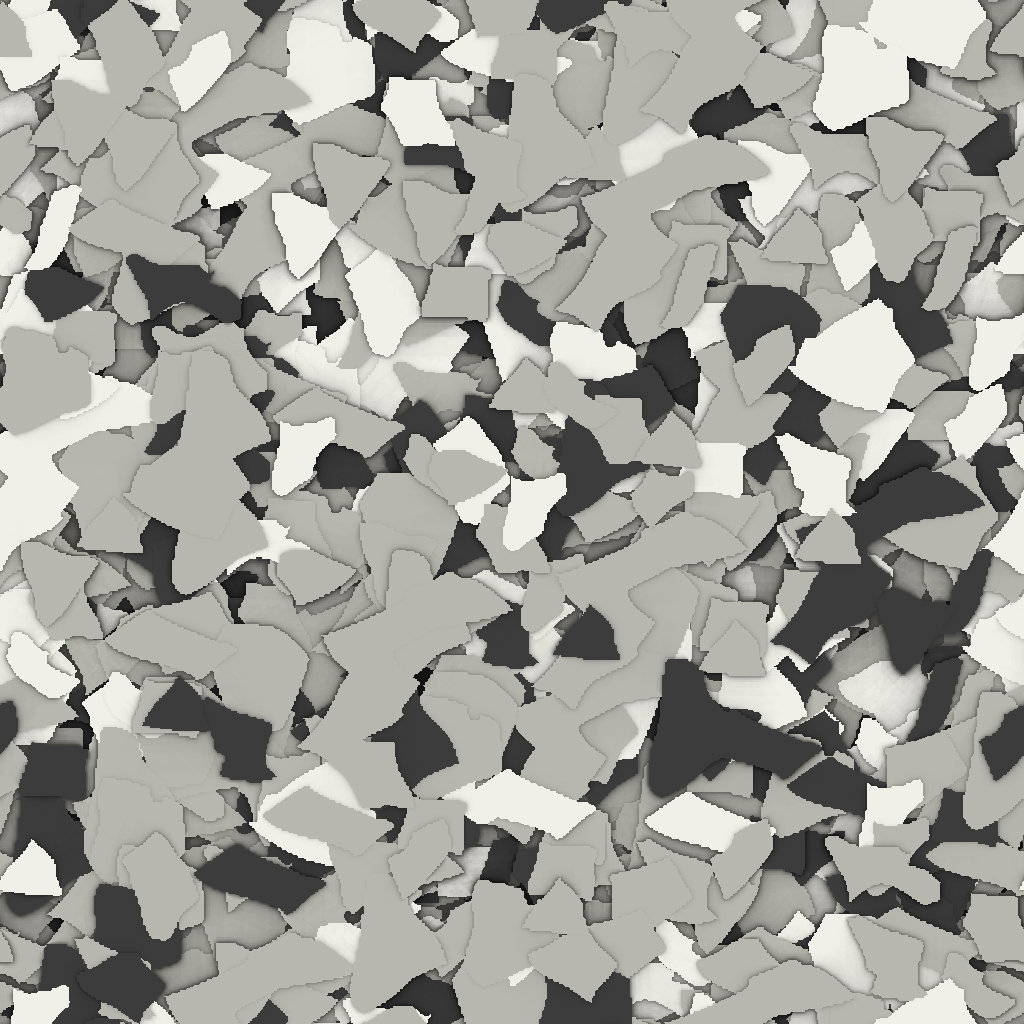
You can install a vinyl flake floor on a back patio or pool deck, but standard epoxy alone will fail outdoors. The fix is a hybrid system: an epoxy basecoat for adhesion, a full flake broadcast, and a UV-stable polyaspartic or aliphatic polyurethane topcoat to handle sunlight, freeze-thaw, and pool chemicals. With that build, an exterior flake floor can run 8 to 12 years before refresh. Without the UV-stable topcoat, a standard epoxy will yellow and chalk inside one summer.
Why Standard Epoxy Fails Outside
Epoxy resin is an aromatic chemistry. Aromatic compounds are not UV stable. When direct sunlight hits an exposed epoxy surface, the polymer chains break down through a process called photo-oxidation. The visible result is ambering, chalking, and eventually flaking. Inside a garage with closed doors, your floor only sees indirect light, and standard epoxy holds up for decades. On a patio, with 4 to 8 hours of direct sun per day, even a high quality 100 percent solids epoxy will visibly yellow in 90 to 180 days. The flake chips themselves are UV stable, but the binder around them is not.
The Right System for Outdoor Flake
An outdoor flake floor is not one product. It is a stack of three. Here is the build we recommend for patios, pool decks, sunrooms, and covered porches.
- Concrete prep. Diamond grind to CSP 2 or 3, not acid etch. Outdoor slabs have more contamination than garages.
- Epoxy primer or basecoat. A 100 percent solids epoxy at 8 to 10 mils. This layer handles adhesion to the slab and is protected from UV by the layers above it.
- Full flake broadcast. Refusal rate, meaning broadcast until the floor will not absorb another chip. For exterior, full broadcast is non-negotiable because it shields the basecoat from sun.
- UV-stable topcoat. Polyaspartic or aliphatic polyurethane at 6 to 8 mils total, usually in two coats. Aliphatic chemistry is UV stable by nature.
- Anti-slip aggregate. Fine silica or aluminum oxide broadcast into the first topcoat. Wet patios and pool decks need traction.
Skip any single layer and you are buying a problem. A naked epoxy with no UV topcoat fails in a season. A polyaspartic over bare concrete with no flake or epoxy under it has nothing to grip and peels at the edges.
Pool Deck Specifics
Pool decks add two more variables: chlorine and constant moisture. Chlorinated water at pH 7.2 to 7.8 is mildly aggressive on resin coatings. More importantly, water sitting on the surface for hours stresses the bond. For a pool deck, push the topcoat thickness to 8 mils minimum and make sure the slab has a working slope of at least 1/4 inch per foot away from the pool coping. If water ponds, the topcoat will eventually micro-blister where it sits.
Slip resistance is the other critical piece. Wet flake floors with no aggregate are dangerous around pools. Specify a coarser anti-slip media, around 40 to 60 grit aluminum oxide, instead of the fine silica used in garages. You lose some sheen but gain real traction at a wet bare-foot level. Coefficient of friction should test at 0.5 or higher under wet conditions to meet most code standards.
What Climate Does to the Job
Outdoor flake floors live in a wider temperature swing than garage floors. Across one year, a Kansas City patio can see 100 degrees F surface temp in July and below zero in January. The coating system has to flex without cracking. Here are the install rules that matter.
- Substrate temperature between 55 and 85 degrees F at install.
- Air temp not falling below 50 degrees F for 24 hours after final coat.
- No rain in the forecast for at least 48 hours. Polyaspartic shrugs off humidity once cured, but rain on a wet coat is a redo.
- Avoid full sun installation. The slab can hit 120 degrees F under afternoon sun and flash the epoxy before you finish broadcasting.
- For freeze-thaw climates, expect 8 to 12 years on the topcoat before refresh, vs 10 to 15 in milder zones.
Color and Flake Choice for Outdoor
Light reflects differently outside than under garage LEDs. Two practical rules for outdoor color picking. First, go one to two shades lighter than what looks right in your sample. Direct sun washes out tones. Second, mid-range earth blends hide pollen, leaf stains, and pool chemistry far better than solid black, solid white, or bright primaries. Tan, gray, and brown blends with multiple chip colors are the workhorse choice. If you want to test combinations against your actual exterior, the custom blend builder lets you mix any of 140 Torginol chip colors before ordering.
Common Outdoor Install Mistakes
The exterior failures we see almost always trace back to the same handful of shortcuts.
- Using interior-rated epoxy as the final coat. Yellows and chalks within months.
- Skipping the slope check. Standing water destroys any coating.
- Light broadcast instead of full broadcast. Exposed binder degrades under UV.
- No anti-slip aggregate. Wet patios become a liability.
- Installing in direct sun. Flash cure ruins flake adhesion.
- Caulking control joints with the wrong sealant. Use a polyurethane sealant rated for exterior movement, not interior caulk.
When a Patio Is Not a Good Candidate
Two scenarios where I would push you away from flake epoxy outdoors. First, a slab that already has spalling or surface flaking. The new coating will tear off as the loose concrete under it lets go. Get the slab repaired and re-leveled first. Second, a patio with active moisture pushing up from the ground, common in slabs poured without a vapor barrier in clay soils. You can test for this with the calcium chloride test or a plastic sheet taped down for 24 hours. If the underside is wet, do not coat it. Solve the moisture issue first, or the coating will blister from below.
Maintenance Differences From an Indoor Floor
Outdoor flake floors do not maintain the same way garage floors do. The exposure profile is different, and the cleaning routine has to match.
- Rinse weekly during pollen season. Pollen, leaf tannins, and tree sap stain a clear topcoat if left to bake on.
- Use a leaf blower instead of a broom for dry debris. Less abrasion on the surface.
- Avoid acidic cleaners. Diluted vinegar, citric cleaners, and pool-shock spillover are harder on a polyaspartic than a pH neutral cleaner.
- Reapply UV-resistant wax annually in high-sun installs. Adds another sacrificial layer that takes the sun damage instead of the topcoat.
- Cover with a tarp for winter in freeze-thaw climates. Not required, but cuts ice melt chemical exposure in half.
None of this is hard, but homeowners who treat an outdoor flake floor like a sealed garage floor see roughly 30 percent shorter topcoat life than those who follow the outdoor routine.
For most homeowners with a sound slab, a flake patio or pool deck is one of the best looking and most durable surface upgrades available, and it costs roughly half of stamped concrete with none of the cracking issues. Just commit to the full hybrid system, not a quick epoxy roll. The cost difference between a doomed quick install (one epoxy coat, no UV topcoat, no anti-slip) and a 10-year exterior install is maybe $400 to $700 in materials on a 400 sq ft patio. The difference in performance is one summer versus a decade. There is no scenario where the shortcut is the right choice outdoors.