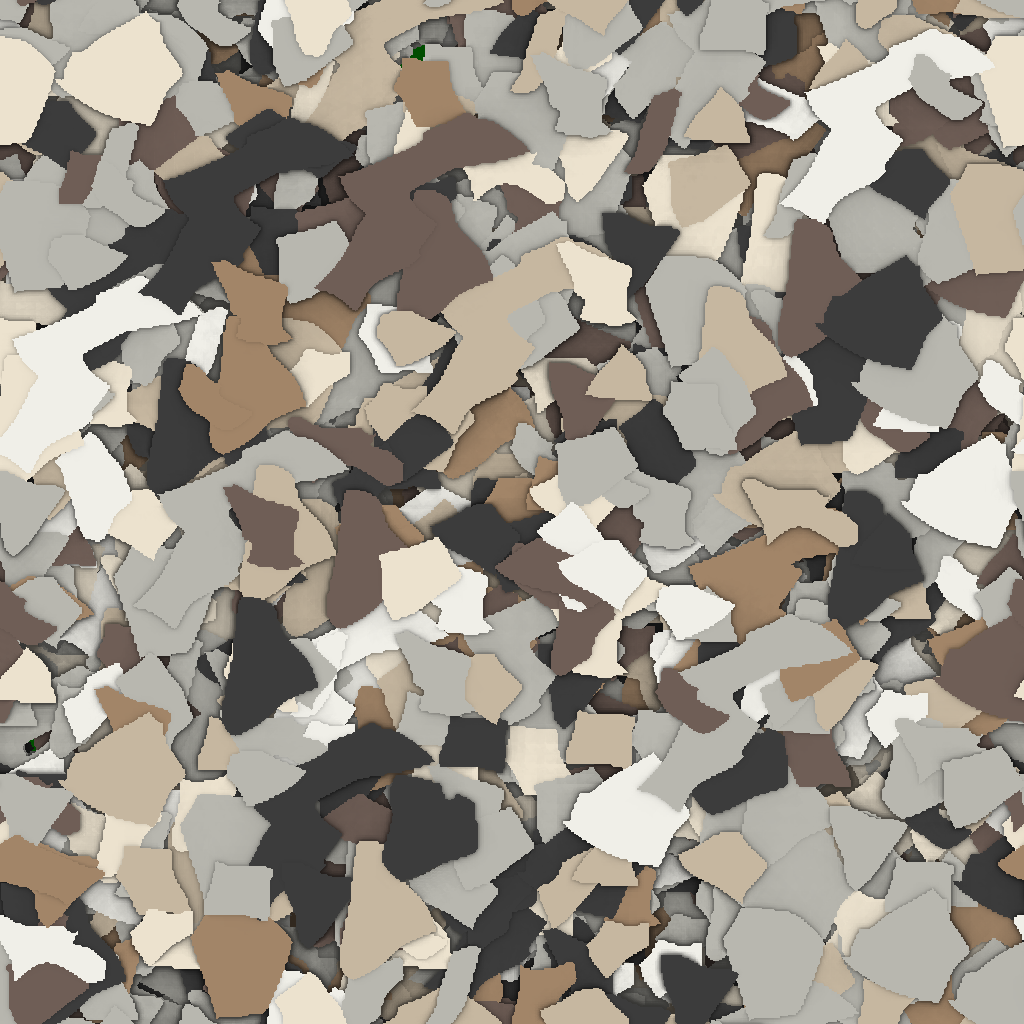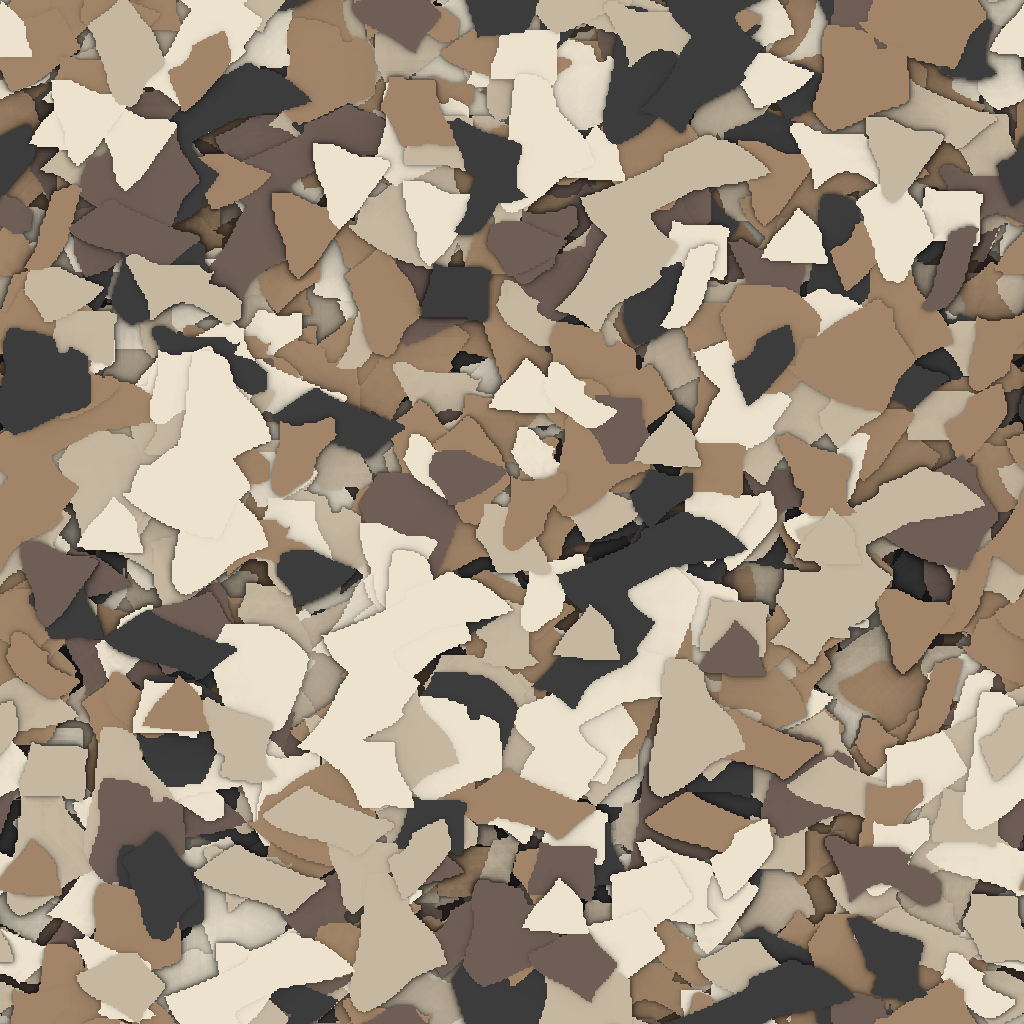
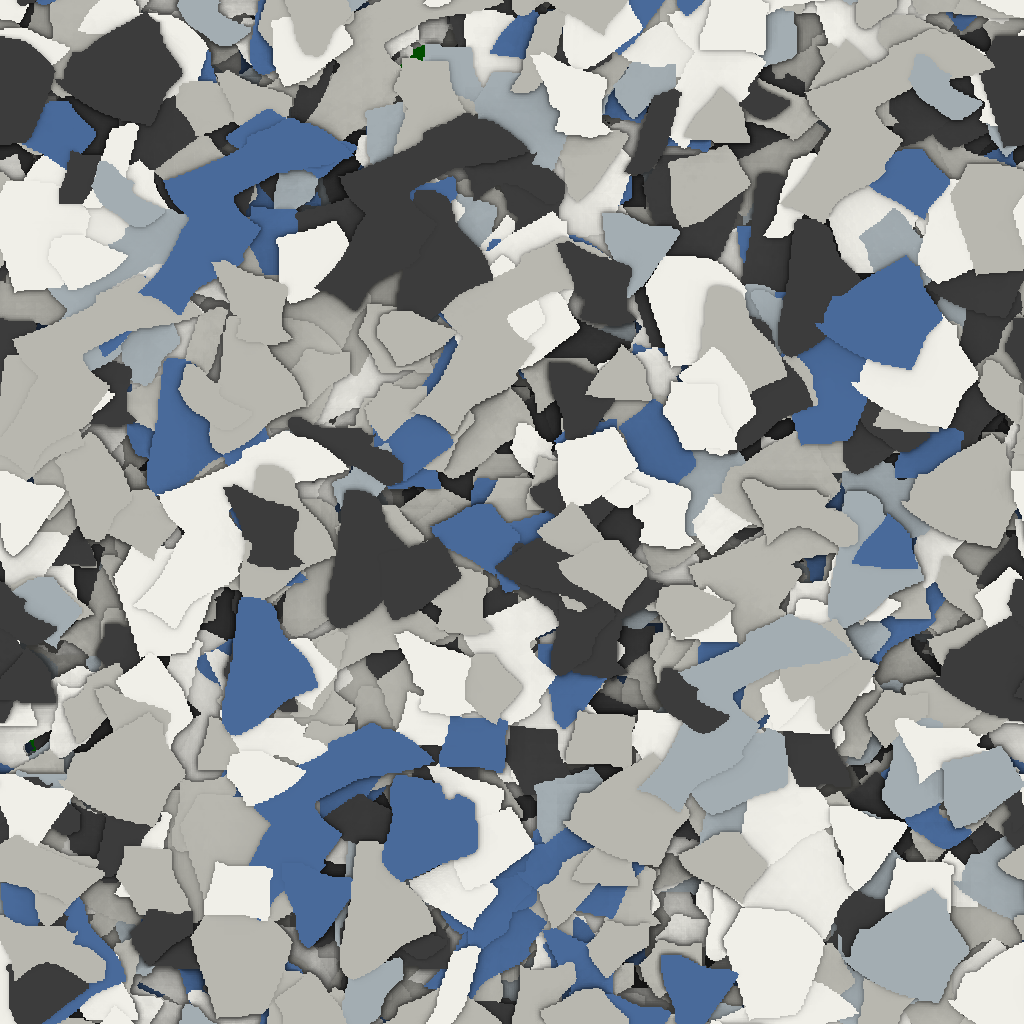
The best flake colors for hiding oil stains, dirt, and tire marks are multi color blends with a mix of dark and medium tones, especially gray, charcoal, black, and tan combinations. Solid colors and high contrast blends are the worst because every drop shows. Specifically, Tuxedo (black and white blend), Stonehenge (gray and charcoal blend), Royal Gray (medium gray multi tone), and River Rock (warm tan and gray) hide stains far better than any solid color or two tone blend. For a garage that gets used, a 70% dark plus 30% light multi tone is the most forgiving pattern.
Why color and pattern matter for hiding stains
Garage floors get three main visual offenders: black oil drips, dark gray tire marks, and brown dirt tracked in from outside. Each one shows up differently:
- Oil drips: glossy or matte black spots roughly the size of a coin to a baseball
- Tire marks: scuff lines and skid streaks in dark gray to black, often near the entry door
- Dirt and salt: gray, brown, or white residue patches, especially in winter
A floor that hides all three needs three properties. First, the dominant base tone should be medium to dark, because dark spots disappear against a dark background. Second, the pattern should have texture variation, so the eye reads the floor as a busy surface and skips over individual flaws. Third, the contrast within the blend should be moderate, not high, because high contrast blends actually highlight new contrast from stains.
The 5 best flake colors for hiding stains
Based on real install feedback and visual testing under typical garage lighting:
- Tuxedo: black and white blend with a balanced 50/50 distribution. Black flake hides oil and tire marks. White flake hides dust and salt. Strong all season performer.
- Stonehenge: charcoal and gray multi tone. Reads as a medium gray floor from standing height. Oil drips disappear within a few feet.
- Royal Gray: medium gray blend with some lighter and darker chips. Hides everything except concentrated bright spills, which you would clean anyway.
- River Rock: warm tan, brown, and gray blend. The warm tones hide dirt and mud especially well. Best pick for floors that see outdoor traffic.
- Tuxedo or Sealmasters at full reject: doubles the visual density and makes the floor read as a near solid pattern that any individual stain just disappears into.
All five are available in the Amazing Blends lineup and run an average of $108 for a 40 lb box.
What does not hide stains well
Avoid these patterns if hiding is a priority:
- Solid colors. Every drop shows. A solid medium gray garage floor highlights every oil drip like a spotlight.
- High contrast two tone blends. A blend that is 50% black and 50% white reads as busy from far away, but oil drips create a third black spot pattern that breaks the rhythm.
- Light tan or beige solids. Dirt shows immediately. Salt residue blends in but tracked mud shows up sharply.
- White or off white blends. Beautiful in a showroom. Brutal in a working garage.
- Pure dark blends with no light flake. Counterintuitive but true. A fully black floor shows dust, fingerprints from kneeling, and white salt residue clearly.
The texture trick
The reason multi tone blends hide stains better than solids is how human vision works. The eye constantly scans for breaks in a pattern. On a solid color floor, an oil drip is a break, and the brain locks onto it. On a multi tone floor, the brain reads the pattern as the floor color and treats every chip variation as part of the texture. An oil drip just becomes one more dark element in a sea of dark elements.
This effect is strongest when the blend contains 4 or more flake colors. Stonehenge, River Rock, and Sealmasters all hit this mark. Two tone blends work but not as well.
Broadcast density also affects hiding
Full reject broadcast hides stains better than decorative broadcast on the same blend. The reason is the same as texture: a denser surface gives the eye more pattern to read, so any stain just adds to the visual noise. Decorative broadcast leaves some base coat showing, and if you spill on the base coat region, the stain registers more clearly.
If hiding is a top priority, broadcast at 90% to 100% coverage with a multi tone blend. The extra flake costs about $100 to $200 more per 400 sq ft, and the floor will look clean longer between cleanings.
Topcoat sheen affects hiding too
A high gloss polyaspartic topcoat shows every fingerprint, water spot, and oil drip as a reflection. A satin or matte topcoat reflects less and visually flattens the surface, which hides stains. For a working garage, a satin polyaspartic is the smart pick. The floor still looks finished, but oil and dust do not glare back at you under fluorescent lights.
If you go satin, you typically lose a small amount of color depth. The matting agent in the topcoat slightly fogs the visual. The trade off is worth it for any garage that sees real use. Pair satin with a multi tone dark blend and the floor will look freshly cleaned for weeks at a time.
What about light colored stains like paint or solvents?
Dark stains get most of the attention, but light colored stains are real too. Spilled white paint, primer drips, antifreeze, and certain solvents leave bright marks that dark floors actually highlight more than light floors. A solid black or charcoal floor with white paint drips reads as starkly as a white floor with oil drips.
Multi tone blends still win for these stains because the pattern hides any individual mark. But if you regularly work with light colored materials in the garage, like painting projects, automotive primer, or chemistry hobbies, lean toward blends with light flake content in the 30 to 40 percent range. Royal Gray and River Rock both fit this profile. Tuxedo specifically handles white spills well because the white flake content already includes light tones in the pattern.
Cleaning matters too
Even the most forgiving color cannot hide everything forever. A quick rinse with warm water and a degreaser every 6 to 8 weeks keeps a flake floor looking close to new. For tire marks specifically, a soft scrub brush and a citrus based cleaner pulls them off in under a minute. The flake topcoat is the cleaning surface, so any standard household cleaner is safe.
Practical recommendation
For a working garage that hides oil, dirt, and tire marks the longest between cleanings, pick a 1/4 inch flake in Stonehenge, Tuxedo, or River Rock, broadcast at 90% to full reject coverage, with a satin polyaspartic topcoat. That combination handles a multi car family garage, a workshop, or a hobby space with minimal visible wear between cleanings.
If you have a specific color of car, tools, or wall paint you want to coordinate with, the same hiding principles apply to custom blends. Use the custom color picker to build a multi tone palette with a dominant medium to dark tone. As long as you keep 70% of the flake in the medium to dark range and add 30% light or accent chips for texture, the floor will hide stains well in any color family.