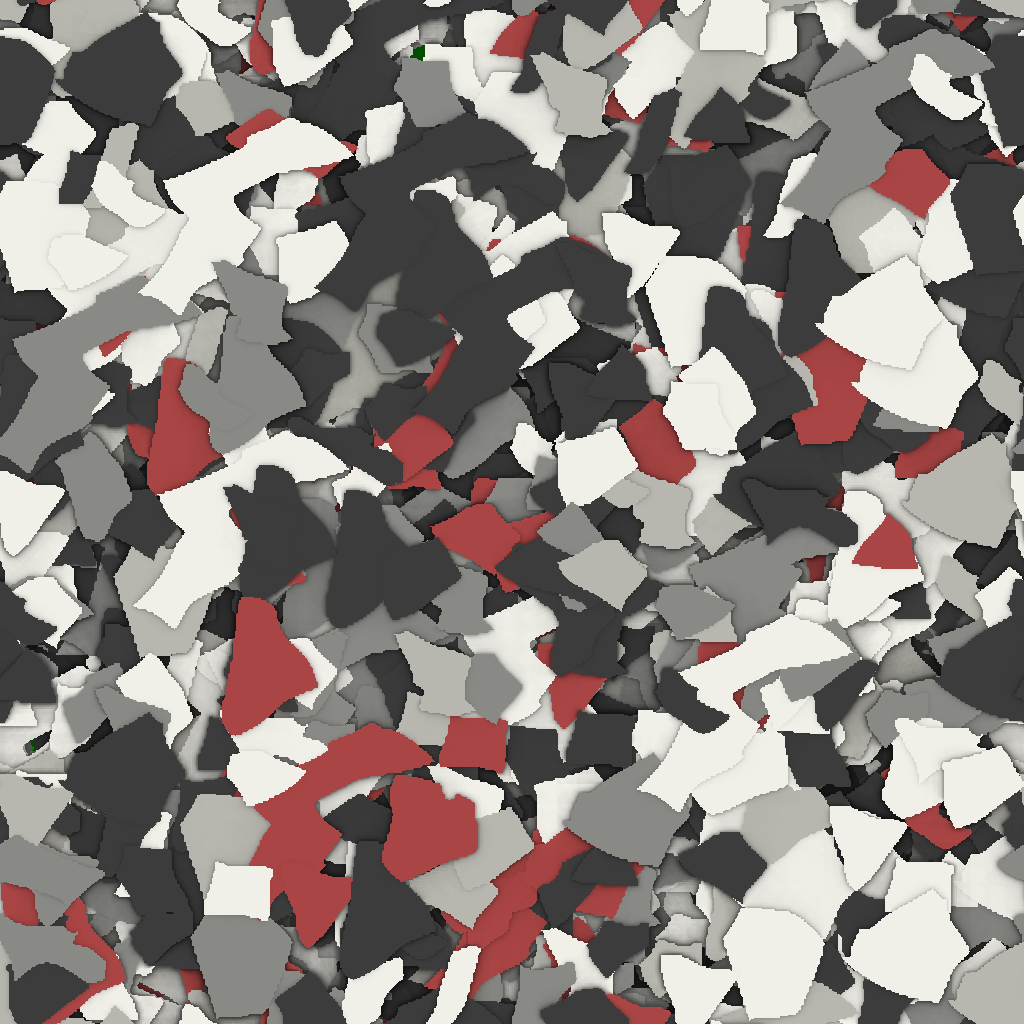
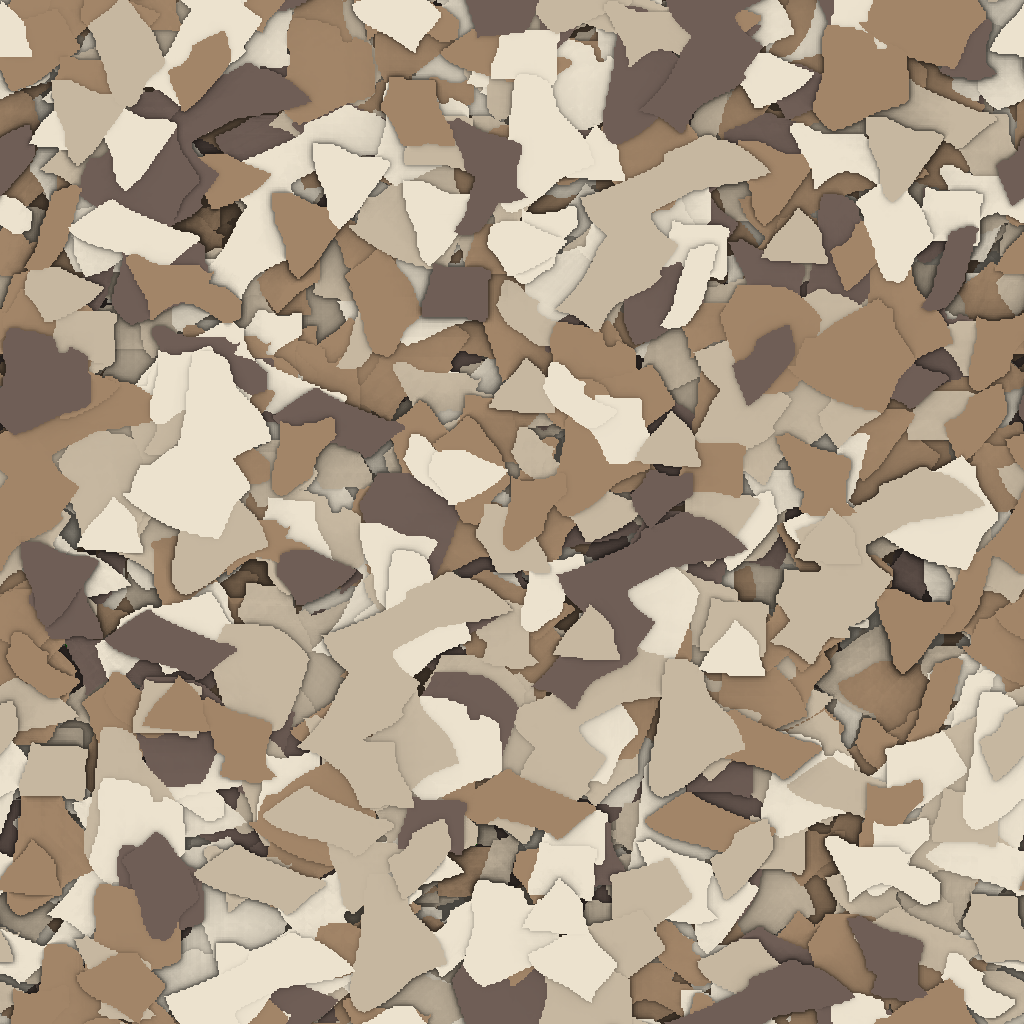
Vinyl flake is a 12 to 15 mil thick decorative chip broadcast into wet epoxy or polyaspartic, used for residential garages, showrooms, and light commercial floors. Quartz aggregate is a structural mineral broadcast at 250 to 375 mils thick over a troweled epoxy bed, used for commercial kitchens, hospitals, and high abrasion industrial floors. Vinyl flake costs $1.50 to $3 per sq ft installed and looks like granite. Quartz costs $6 to $12 per sq ft installed and feels like a paved floor underfoot. For garages, vinyl flake is the right choice 95% of the time.
What each product actually is
Vinyl flake is a thermoplastic vinyl resin sheet that is colored, cured, ground into chips, and screened to size. The chip is non porous, lightweight, and flexible. Common sizes are 1/16 inch, 1/8 inch, and 1/4 inch. The chip is purely decorative. It does not add structural strength to the floor. It adds texture, color, and visual depth.
Quartz aggregate is natural silica sand or colored ceramic coated quartz, graded to sizes from 16 mesh (about 1 mm) to 8 mesh (about 2.4 mm). The aggregate is hard, dense, and structural. When broadcast into a troweled epoxy bed and topcoated, it forms a wear surface similar to terrazzo. It adds real structural strength to the floor.
Thickness comparison
This is where the two products diverge fundamentally:
- Vinyl flake floor: 25 to 35 mils total thickness (about 1/32 inch)
- Quartz aggregate floor: 250 to 375 mils total thickness (about 1/4 to 3/8 inch)
A quartz floor is roughly 10 times thicker than a flake floor. That extra thickness is real structural material, not just topcoat. Quartz floors take direct steel wheel traffic, dropped tools, and chemical splash that would scratch through a flake floor in months.
Cost comparison
Material and installation costs are very different:
- Vinyl flake DIY: $400 to $900 in materials for a 400 sq ft garage
- Vinyl flake installed: $1,200 to $3,500 for the same space
- Quartz aggregate DIY: Not really feasible because troweling and grinding tools are commercial grade
- Quartz aggregate installed: $2,400 to $5,000 for a 400 sq ft space
For a 1,000 sq ft commercial space, the spread widens. Flake might run $1,500 to $3,000 installed. Quartz often runs $6,000 to $12,000 installed.
Where vinyl flake is the right choice
Vinyl flake is the right pick for these spaces:
- Residential garages, all sizes
- Workshops, hobby spaces, man caves
- Showrooms and dealerships
- Light commercial retail floors
- Basements and finished interior spaces
- Gyms with rubber flooring under equipment but flake in walkways
In a typical home garage, the flake floor handles hot tires, oil drips, jack stands, chair rolling, and dropped tools for 15 to 20 years with a recoat every 8 to 12 years. The look is granite or terrazzo from standing height. The texture is barely raised, just enough for slip resistance.
Where quartz aggregate is the right choice
Quartz is the right pick for these spaces:
- Commercial kitchens with grease and hot water exposure
- Hospital and medical facility floors with chemical splash
- Veterinary clinics and animal facilities
- Food and beverage processing floors
- Pharmaceutical clean rooms
- Industrial floors with steel wheel traffic or heavy machinery
- Public swimming pool decks
The thickness and density of quartz handle abuse that would destroy any flake floor. The texture also provides much more aggressive slip resistance than flake, which matters around water and grease.
Slip resistance compared
Both products improve slip resistance over bare concrete or smooth epoxy, but the levels are different:
- Smooth epoxy: COF (coefficient of friction) around 0.4 dry, 0.2 wet
- Vinyl flake floor: COF around 0.6 to 0.7 dry, 0.4 wet
- Quartz aggregate floor: COF around 0.8 to 0.95 dry, 0.6 to 0.8 wet
A COF above 0.5 is considered slip resistant. A COF above 0.6 wet is considered high slip resistance. For garages, the vinyl flake number is plenty for typical foot traffic and parked cars. For commercial wet environments, quartz is the safer pick.
Look and feel
Vinyl flake reads visually as decorative. The flake pattern is the main visual element. Floors look like granite or terrazzo, with depth and visual interest. The surface feels smooth underfoot once topcoated. Walking barefoot is comfortable.
Quartz reads visually as industrial. The aggregate creates a uniform speckled texture that looks like a paved floor or commercial terrazzo. The surface is noticeably gritty underfoot. Walking barefoot is uncomfortable for most people.
Repairability
Vinyl flake floors are highly repairable. You can sand a damaged section, recoat with base epoxy, rebroadcast flake, and topcoat in two days. The repair blends in because the flake pattern hides the seam.
Quartz floors are harder to repair because the aggregate stack is thick and the seam between old and new is visible. Repairs usually require grinding the damaged section down to substrate and rebuilding the full stack.
Color and design flexibility
Vinyl flake offers far more color and design flexibility than quartz. Vinyl chips come in 140 plus solid colors plus dozens of pre blended palettes. You can build custom blends, accent borders, and color transitions easily. The chip technology lets manufacturers produce highly specific color matches for branding, residential interior design, and architectural specifications.
Quartz aggregate is more limited. Natural silica quartz is white to tan. Colored ceramic coated quartz comes in 20 to 40 standard colors depending on the manufacturer. Custom colors are possible but expensive because the ceramic coating process requires minimum batch sizes. For a one off residential project, you choose from the standard palette.
This flexibility difference is one of the underrated reasons vinyl flake dominates residential markets. Homeowners want to coordinate floors with cabinets, walls, vehicles, and personal preference. Vinyl flake makes that easy. Quartz makes it hard.
Install time and complexity
Time to install differs dramatically. A typical 400 sq ft vinyl flake garage takes 2 to 3 days as a DIY project: one day for prep and base coat, one day for flake broadcast and first topcoat, optional third day for second topcoat. A pro crew can do it in one long day with a fast cure system.
A 400 sq ft quartz aggregate floor takes a pro crew 3 to 5 days minimum: one day for prep, one day for first epoxy bed and quartz broadcast, one day for second quartz layer, one to two days for grout coats and topcoats. The trowel work alone requires skilled labor that DIYers rarely have. The grinding to flatten the cured aggregate between coats is also commercial level work.
Maintenance requirements
Vinyl flake floors maintain easily. Sweep weekly, damp mop monthly with a neutral cleaner, recoat the topcoat every 8 to 12 years. The flake layer itself does not need maintenance. Total annual maintenance cost for a typical garage is under $50.
Quartz floors need more attention. The aggregate texture traps dirt and grease, so cleaning requires either a deck brush and water or a commercial auto scrubber. The grout coat (clear sealer between aggregate and topcoat) needs renewal every 5 to 7 years. Annual maintenance cost in a commercial kitchen can run $300 to $800 for proper cleaning supplies and seasonal recoats.
Practical recommendation
For a residential garage, vinyl flake is the right call. The cost is fraction of quartz, the look is more decorative, the install is DIY friendly, and the performance is more than enough for home use. Pick a 1/4 inch flake in a multi color blend, broadcast at decorative density, and top with polyaspartic. That floor will outlast most of the cars that park on it.
For commercial kitchens, medical facilities, or industrial spaces, quartz aggregate is the right call and you should hire a commercial flooring contractor with troweled epoxy experience. Do not try quartz as a DIY project. The trowel skills and tool requirements are real.
To plan a flake install, start with square footage, then pick a blend that matches your garage and how the room will be used. Browse the full flake catalog to see how different blends read in person before you commit.